Your team isn't slow. They're working around gaps your process never defined.I'm Jason Sayen, a Process Architect who helps growing companies expose the invisible work that's quietly breaking their operations, so they can scale without burning out their team.
Invisible work is costing companies $12,506 per employee. Every Year.
Source: 2023 State of Business Communication Report, Grammarly Business
Multiply that by your headcount and you'll see why "we'll fix it later" is the most expensive sentence in your company.
Growth made the problems worse, not better
Revenue is up. So is the friction. Your systems aren't scaling...they're cracking.
You're the bottleneck
If every approval, decision, and answer routes through you, that's not a leadership issue. It's a clarity issue. Your team doesn't have the structure to move work forward without you in the room.
Your team isn't slow. They're stretched thin.
When the process isn't defined, the team spends the day reacting instead of moving forward. It feels like they are running in circles because without structure...they are.
You do have a process. It's just in your head, and that's a problem.
When companies grow, the instinct is to document. Write SOPs. Build checklists. Buy software.
That instinct is wrong.Most companies don't have a documentation problem. They have an invisible work problem.
SOPs explain tasks. They don't show how work actually moves across roles, handoffs, and departments. That's why new hires drift, handoffs break, and inconsistency keeps coming back even when everything is "documented."
Documentation doesn't eliminate the gaps. It hides them until someone runs into one.The biggest problems in your business are the ones you can't see.
Three signs the work is invisible in your business
You're managing by exception
When no one can see how the work gets done, every day becomes a fire drill. You stop managing the work and start being managed by it. Burnout, frustrated clients, and profit disappearing in places you can't track.
Every employee built their own version of "this is how it's done"
When the process lives in people's heads, every person makes up the parts they can't see. Not out of defiance, out of survival. Handoffs break. Quality drifts. The same problems resurface every quarter with every client.
Your software didn't fix the problems, it scaled the chaos and AI will only make it worse
Software is only as good as the process underneath it. If you can't see how the work flows, no tool will fix it, it'll just digitize the mess. That's why most companies end up with software that creates more friction, not less.
Software doesn't fix broken processes. It scales them.
How I make the invisible work visible: The G.U.I.D.E. Framework
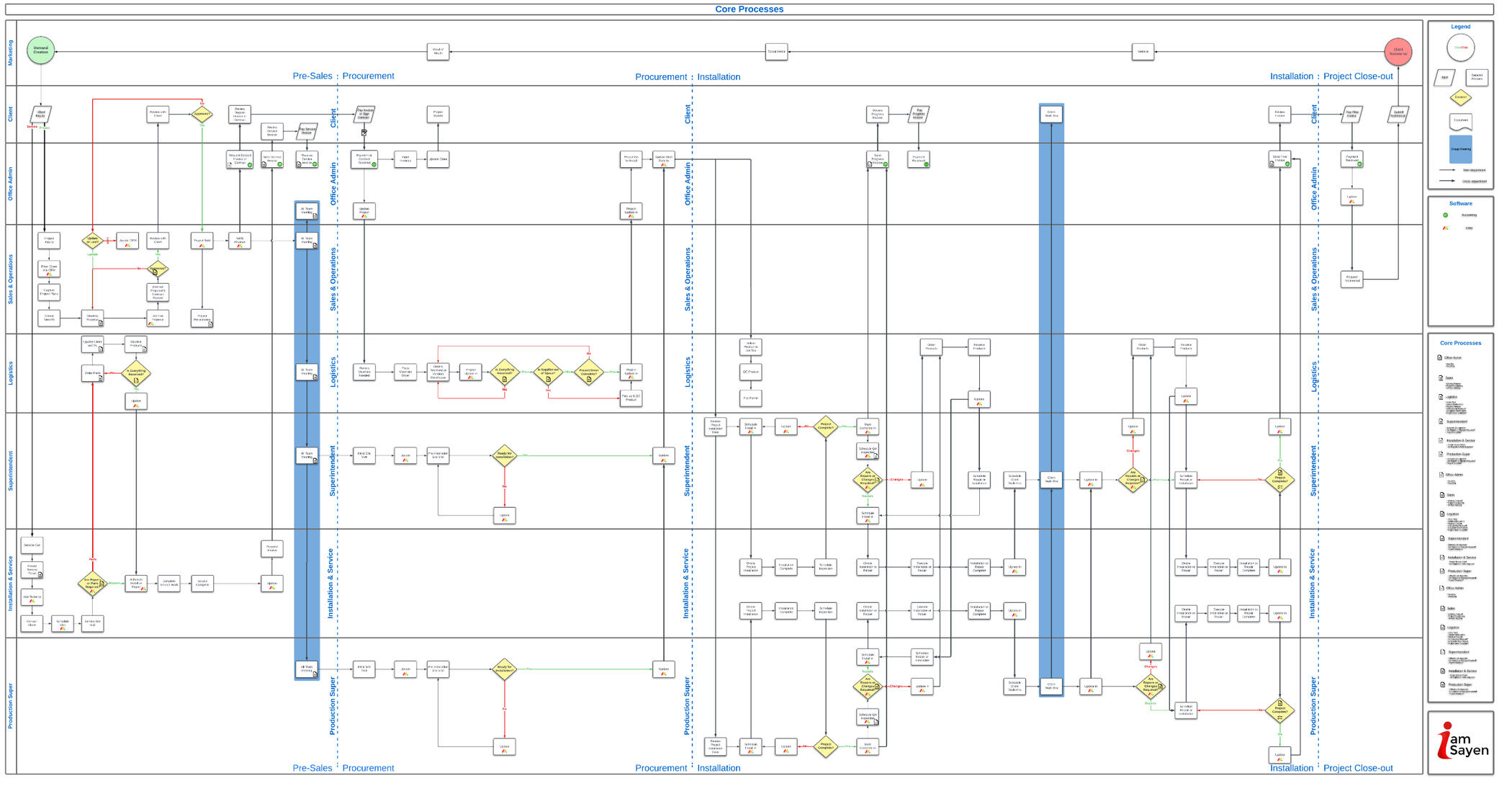
Get Visibility - Map how the business actually operates today, across departments, handoffs, systems, and people. Not the org chart. The real flow. Most companies have never seen this.
Understand Flow - Find where the work starts, where it stops, and where it gets stuck. Expose the gaps, the rework loops, and the silent handoffs that are slowing the team down.
Identify Gaps - Name the inefficiencies, the unclear handoffs, the misaligned software, and the knowledge that only lives in one person's head. This is where the team stops blaming each other and starts seeing the system.
Define Standards - Now, and only now, does documentation make sense. We build the SOPs, checklists, and Responsibility Matrix on top of work that's already visible, so they reflect how the work actually flows.
Execute with Cadence - Process only works if it's lived, not filed. We install the weekly rhythms, project reviews, and feedback loops that keep the system alive after I leave.
What you'll have when we're done:
Clarity on how the business actually operates.Alignment across roles, handoffs, and expectations.Structure the team can rely on without you in the room.
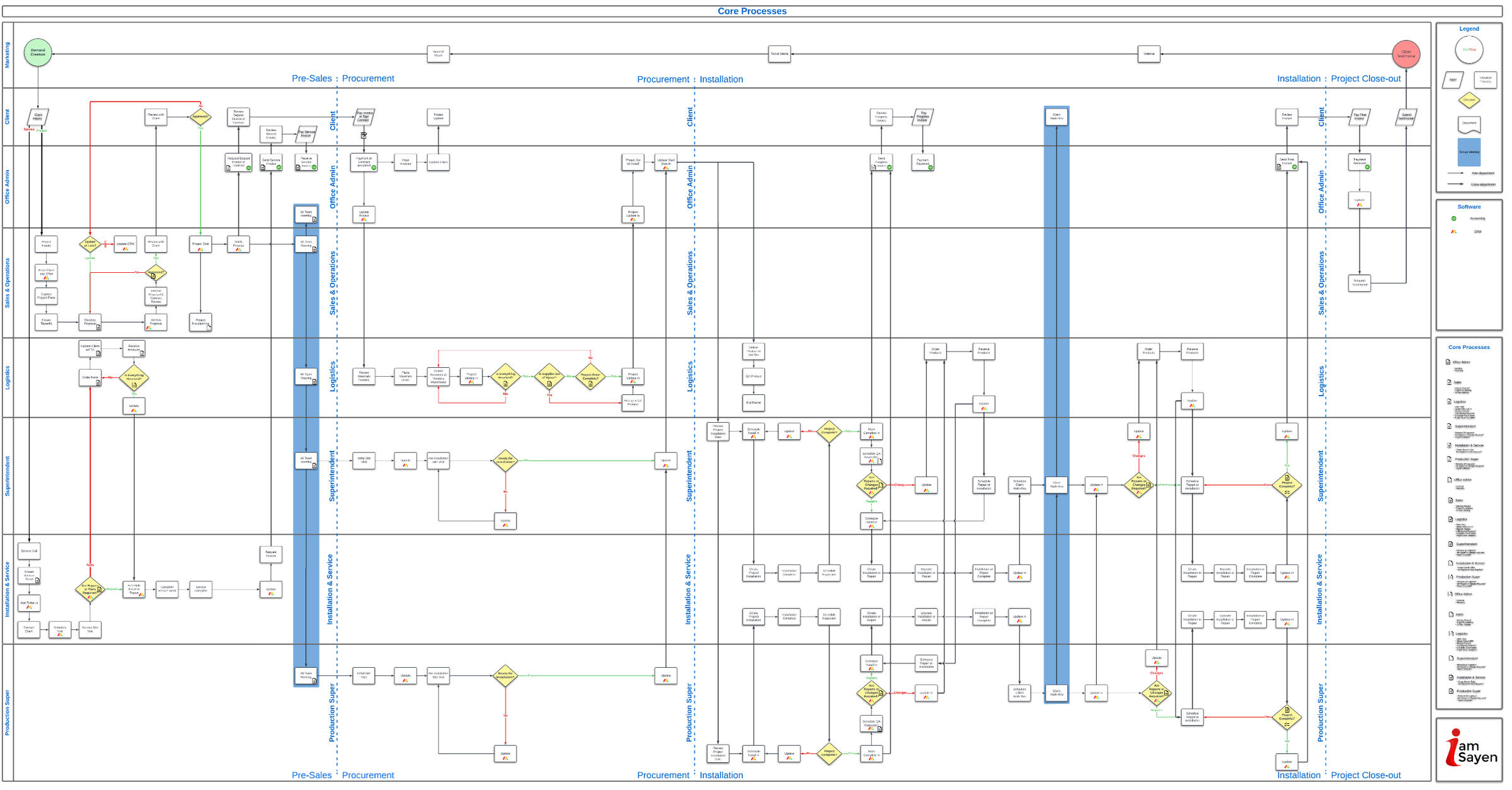
When work becomes visible, accountability becomes visible.

Hi, I’m Jason, a Process ArchitectNot a consultant. Not a coach.I help companies see the work that's been invisible to them and build the structure to scale it.For 30 years I worked inside fast-growing organizations in luxury consumer electronics: AudioControl, JL Audio, Kaleidescape, AVAD, Savant, LK & Associates.The pattern was always the same. Companies weren't struggling because of their people. They were struggling because the work was invisible to the Founders, Management, the Team and to each other.Founders lost visibility. Handoffs broke in silence. Tribal knowledge took over. And everyone was "making it work" instead of working with structure.My turning point came when I became a Lean Six Sigma Black Belt. It gave me a new way to see operations. Not as a collection of tasks, but as a flow. A system. A set of habits that either supports growth or quietly sabotages it.That perspective became the G.U.I.D.E. Framework. And it's why I work the way I do. I don't hand you a report. I help your team see the work, align on how it should flow, and build the habits to sustain it.
This isn't advice. It's activation.
What else do I need to know?
How much does it cost? - Virtual Business Audits start at $3,000 and In-person Workshops start at $8000.
How much time should I dedicate to this? - Virtual Workshops are four, 60-90 minute sessions. In-person workshops are 1 or 2 days. Implementation takes a minimum of 6 months.
How long will it take to see results? - Most clients feel the impact after the first meeting.
Your team walks away with clarity, alignment, and immediate improvements to how they work.
Full implementation typically takes around 6 - 8 months to build the habits.
Is this only for Specialty Trade Contractors? - While I spent 30+ years in luxury consumer electronics and specialty contracting, I work with companies across Fintech, Franchising, Investment Banking, Manufacturing, Renewable Energy, Healthcare Technology, and more.If you’re growing fast and your operations haven’t kept up, the G.U.I.D.E. Framework will identify why.
How do I know if this is right for me? - If miscommunication, unclear roles, repeated mistakes, and constant firefighting are costing you time, money, and momentum… this is exactly the right fit.
What if my team is resistant to change? - They usually aren’t...they’re frustrated. In most companies, employees are asking for clarity. When they finally see a structure that makes their jobs easier, buy-in happens quickly.
What if we’ve tried fixing our processes before and it didn’t stick? - Most process work fails because it starts with documentation instead of visibility. You can't write an SOP for work no one can see. The G.U.I.D.E. Framework fixes that by getting the work visible first and then building documentation on top of it, with the team that actually does the work in the room.